- Degen Lawyer's Newsletter
- Posts
- Degen Lawyer's Newsletter- UN on AI use in Military, Bitcoin & Property Rights, Robot Lawyer trend and more!
Degen Lawyer's Newsletter- UN on AI use in Military, Bitcoin & Property Rights, Robot Lawyer trend and more!

Degen Lawyer's Newsletter
November 07, 2023
Degen Lawyer's Newsletter

Welcome to Degen Lawyer's Newsletter, where we bring you your weekly dose of legal insights, and regulatory updates in the emerging tech and law space. Our expert lawyers serve up curated analysis, hot takes, and expert commentary, sprinkled with a healthy dose of the wacky and meme-worthy content. Enjoy!
In this week’s edition:
News In Short
Article Of The Week
Bet You Didn’t Know!
News in short:
Spain to prepone enactment of MiCA Crypto rules by six months
Spain has decided to expedite the implementation of the EU crypto law, MiCA, by six months. The new rules, which introduce stringent consumer-protection measures for crypto firms, will not come into effect by December 2025. The Spanish government aims to create a predictable and stable regulatory and supervisory framework by shortening the transitional period of application. This reduced timeline for implementation is due to concerns that a prolonged implementation period would create an uneven playing field.
Turkey in final stages of bringing about crypto regulation
Turkey is in the final stage of bringing crypto legislation to its parliament, which is a necessary step for it to be removed from the Financial Action Task Force’s (FATF) “gray list”. Once the crypto legislation is passed, Turkey will fulfill FATF’s technical requirements, it is likely to be taken on FATF’s “gray list”, if there are no other political considerations. The implementation of crypto regulation is a global trend to ensure a robust regulatory environment in the rapidly evolving cryptocurrency sector. Turkey has been FATF’s grey list since 2021, being placed alongside Pakistan and Yemen. Being taken off this list will prove to be a huge relief for Turkey.
UN to Address Lethal Autonomous Weapons and AI in Military
The UN General Assembly is set to vote on a resolution in December that concerns the use of AI weapons for military purposes and calls for international rules to be created. Drafted by Austria, the resolution relates to Lethal Autonomous Weapons systems (LAWS), which use AI to automatically set attack targets and carry out deadly strikes with no direct human control. The resolution expresses concerns that use of LAWS could lead to serious humanitarian, ethical and profiling issues and trigger an arms race. The resolution specifies a schedule to produce a report on the views of each member state on the regulation of LAWS to a general assembly meeting to start in September next year. An international understanding on LAWS will serve to enable responsible use of LAWS, might avoid an arms race and possibly prevent the terminator.
Article of the week
Bitcoin and Property Rights

Introduction
Since the days of the cavemen, we humans have had a problem with scaling. Our physical and mental abilities haven't really changed much, but our societies have grown to include millions of people. Luckily, we've come up with ways to work together, but it's not always easy. In today's unpredictable world, it can be tough to know who you can trust.
That’s where institutions come in -things like social norms, laws, and other shared values help us interact more smoothly. With their help, we can extend our trust beyond our little tribe and cooperate with people we don't even know. It's like having a secret handshake that lets you know someone's cool, even if you've never met them before.
Origins of the idea of Property Rights
One such crucial institution is the idea of a monopoly on violence, where a specific group of people are empowered to protect a community, allowing individuals to focus on other things. This monopoly on violence formalizes shared morality and establishes a formal legal system. In modern times, the State has monopolized the legitimate use of violence.
The trade-off? The individual's rights are restricted in order to maintain the State's monopoly over the use of violence. Based on State’s monopoly over violence is the idea of right to property. Property rights of all sorts—in real estate, in shares of corporations give the owner a monopoly over a resource.
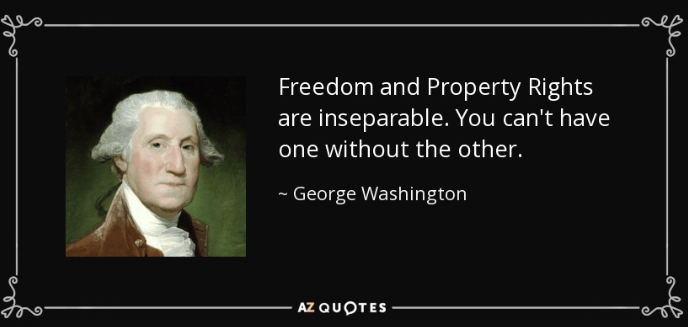
Property Rights
Private property rights are one of the biggest drivers of economic growth in the modern times. People tend to lose their motivation to work hard when they fear that their hard-earned money or possessions could be taken away from them without any warning or recompense.
Hence we need an institution to protect us from this. The State punishes those who steal or intrude in other people right to enjoy their property. But what if I tell you, that there exists a novel economic system that detaches property rights from the legal system and the monopoly on violence.
Bitcoin as Property
Bitcoin operates as a property system that mimics the role of legal instruments like deeds and institutions such as public records office, but without depending on legal structures or the law to manage itself, instead it relies on a network of users to maintain its integrity.
This system is transparent and everyone can keep each other accountable, making it harder for any sneaky shenanigans to go down. It's like the ultimate economic democracy, where the power is truly in the hands of the people.
From a property perspective, this system facilitates capacity to either grant or deny access or use to others. It is the interplay between public and private information that defines ownership in Bitcoin and the interplay between nodes, miners and holders that is responsible for the enforcement of the said rights.

The main goal of Satoshi Nakamoto was to create a payment system that could operate outside of the traditional legal system and jurisdiction of any State- no regulator or one party can control Bitcoin. It is merely a software code which records transactions that nodes agree on. Now since code cannot be regulated, the State will look to regulate its subjects which makes Bitcoin’s case even stronger.
In conclusion
While the principles of private law pertaining to property can be extended to include Bitcoin, the unique nature of Bitcoin presents a variety of intriguing questions.
For instance, existing property rights extend to only two types of properties:
Things in possession;&
Things in action (stocks)
Bitcoin doesn’t squarely fit into either of the categories properly. Thus, a variety of intriguing questions and considerations arise which require a deeper careful analysis.
Bet You Didn’t Know!
This ‘Robot Lawyer’ was nicknamed the ‘Robinhood of the Internet’ for helping people navigate legal matters!
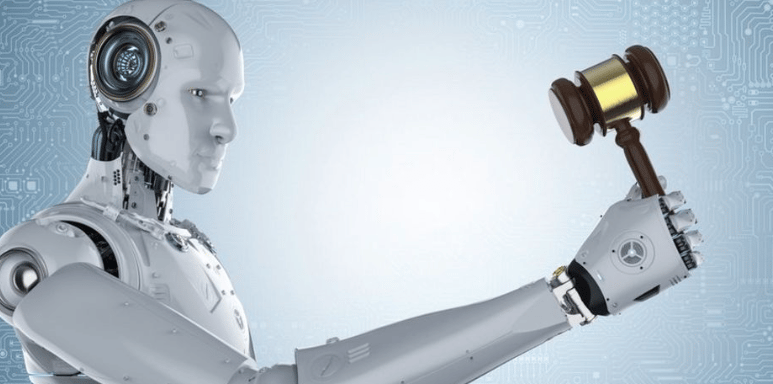
Joshua Browder's DoNotPay, an AI-powered chatbot, made headlines for assisting users in fighting parking tickets, canceling subscriptions, and even navigating complex legal procedures. This digital legal assistant, dubbed the 'Robin Hood of the Internet,' highlighted the intersection of technology and law, offering an accessible and cost-effective solution for everyday legal challenges. As emerging tech continues to disrupt traditional legal services, the 'Robot Lawyer' trend demonstrates how innovation can democratize access to justice and empower individuals in their legal endeavors.
Thank you for reading!
If you would like to receive regular updates on all things regulatory and policy in the emerging technology space, please click the subscribe button below and follow us on our socials and share it with others you think will enjoy it!
Reply